
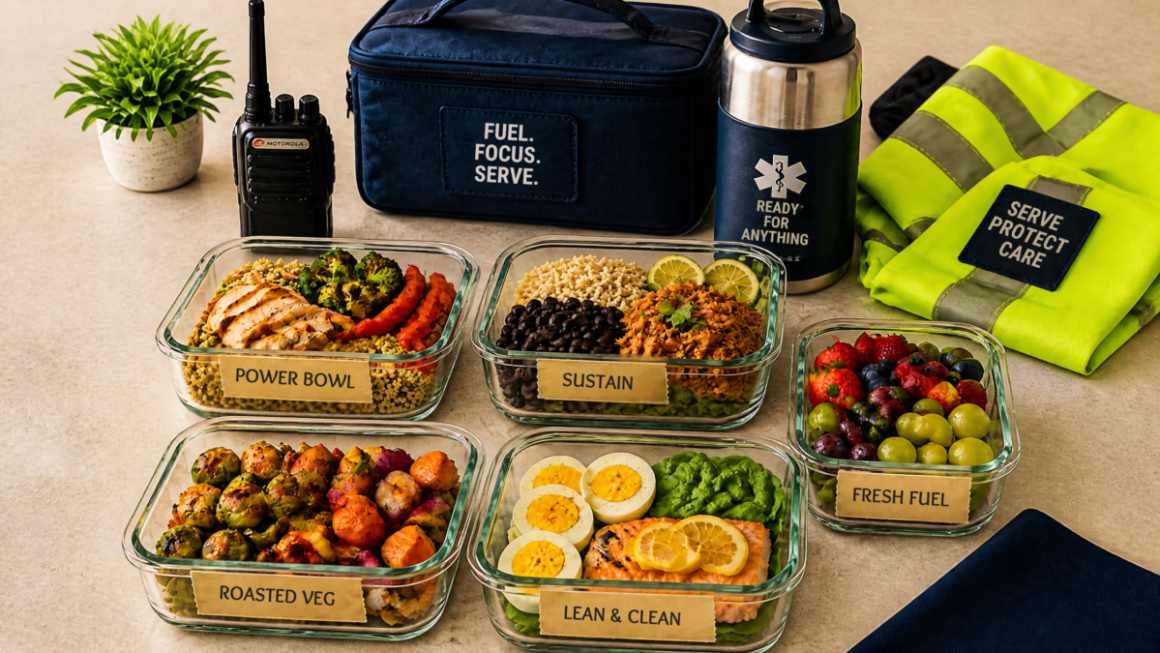
Meal Prep for Shift Work: A First Responder Guide
Meal Prep for Shift Work: A Practical System for First Responders
If you work shifts in policing, fire, ambulance or Defence, you already know that the roster tells you when you start, not when you’ll get to eat. Jobs run over, breaks disappear, and the meal you packed can still be in the bag when you get home at 3 am.
After 14 years in the RAAF, and through my work with police, emergency services, veterans and Defence personnel, I’ve come to see shift-work nutrition as a planning problem more than a willpower problem. The aim isn’t perfect eating. It’s having something decent within reach whatever the shift throws at you, so you’re not just running on caffeine and whatever the servo has left.
This is the system I share in my tactical nutrition sessions. Take what works for you and adapt it to your roster.
Why eating well on shift is so hard
It isn’t a lack of discipline. Shift work stacks several things against you at once:
- Sleep loss and fatigue make sweet and fatty foods more appealing, and make planning feel like a chore. An Australian study that followed new paramedics through their first year on the road, and not surprisingly, found their sleep quality got worse once shift work began.
- Your body clock expects you to be asleep and fasting overnight. Digestion, appetite and blood glucose control all run on a daily circadian rhythm, so food eaten in the small hours is handled differently from the same meal at lunchtime.
- Stress affects appetite in different ways. After a hard job, some people can’t face food, and others find themselves reaching for comfort food. Both are normal stress responses.
- Your gut often feels it first. Bloating, reflux or an unsettled stomach on night shift are common complaints.
So the goal is a system that still works when you’re tired, stressed and short on time.
My three rules for shift-proof food
- Pack food that works hot or cold. If the microwave queue is long or you get called out, you can still eat it.
- Keep something within arm’s reach. A small stash in your bag, locker or vehicle means a missed break doesn’t become a missed meal.
- Keep nights lighter. Have your main meal before a night shift, then a smaller snack overnight (more on the research below).
Step 1: Plan around your roster, not the calendar
Most meal-prep advice assumes a Monday-to-Friday week. Instead, look at your next roster block and mark:
- Your cook-up day. Choose a day off when you’ve had proper sleep, it might not be the day after your last night shift.
- Your night shifts. These are the days you most need ready-made food.
- A mini top-up day midway through the block, for a quick second cook or a freezer swap. Cooked leftovers only keep for about three days in the fridge, so one cook-up rarely covers a whole week safely.
Step 2: The 2-2-2-1 cook-up
Rather than cooking five identical meals, I suggest cooking building blocks you can mix and match. It takes about 90 minutes.
- 2 proteins: for example, a pot of beef and lentil bolognese, plus a tray of chicken thighs or a dozen hard-boiled eggs
- 2 slow carbs: brown rice, wholemeal pasta, roasted sweet potato, or microwave grain pouches if you’re short on time
- 2 vegetables: one tray roasted (pumpkin, capsicum, zucchini, red onion), plus one ready to eat raw (washed salad leaves, carrot and cucumber sticks, cherry tomatoes)
- 1 flavour: a simple dressing (extra virgin olive oil, lemon, garlic), a jar of pesto or a tub of hummus, so leftovers don’t taste like leftovers
From those components you can make a hot bowl one day, a wrap the next and a cold salad box after that. Portion out about half on the day and freeze the rest.
Anti-inflammatory, gut-friendly swaps
While you’re cooking, a few simple swaps add more of the foods linked with better long-term health and mood.
- Use extra virgin olive oil as your main cooking oil.
- Add legumes to mince dishes and salads (lentils, chickpeas, four-bean mix) for fibre that feeds your gut bacteria.
- Include oily fish a couple of times a week. Tinned salmon and sardines are cheap and need no cooking.
- Choose wholegrains and include colourful vegetables at most meals.
- Go slowly with fibre if your gut is unsettled on nights. Gentler options like oats, banana, cooked vegetables and yoghurt may sit better overnight.
Step 3: Pack an esky and a go-bag
I like to think of shift food in two parts.
The esky (perishable food for this shift)
An insulated cooler bag with your main meal, a snack or two and a frozen water bottle or ice brick. Pack it straight from the fridge just before you leave.
The go-bag (shelf-stable backup)
A small bag that lives in your locker, kit bag or vehicle, so you’re covered on the shift that runs four hours over. Restock it on your cook-up day. Good options include:
- Tinned tuna or salmon (ring-pull) and wholegrain crackers
- Unsalted nuts, or a trail mix with seeds
- Roasted chickpeas or broad beans
- Long-life (UHT) milk poppers, or a protein powder sachet to shake with water (see my protein powder guide for what to check on the label)
- Wholegrain muesli bars that are lower in added sugar
- Fruit cups in natural juice, or dried fruit
- A microwave rice or quinoa pouch for when you do get a microwave
- A portable food warmer or heated lunchbox are a great way to heat meals on the go using 12V/24V vehicle sockets, standard mains power, or built-in rechargeable batteries without needing a microwave
Hydration
Keep a large refillable bottle with you and sip through the shift, rather than waiting until you’re thirsty. This is especially important in high summers, in heavy PPE or after a physically demanding job. If you’re sweating heavily for long periods, an electrolyte supplement may be necessary.
Food Safety in the Heat
A cab or car parked in the sun can get very hot, very quickly, so this matters more than people think.
- The danger zone is 5°C to 60°C. Food-poisoning bacteria grow in this range, and fastest around body temperature. Keep cold food at 5°C or colder.
- Use the 2-hour/4-hour guide. Add up all the time perishable food has spent out of the fridge. If it’s under 2 hours, eat it or put it back in the fridge. Between 2 and 4 hours, eat it straight away. Over 4 hours, throw it out.
- Cool cooked food first. Divide hot food into shallow containers and refrigerate it once it stops steaming. Never put warm food straight into an esky, because eskies can’t cool food fast enough
- Keep the esky cold and out of the sun. Use plenty of ice bricks or a frozen water bottle, keep the lid closed, and keep it in the air-conditioned cabin rather than a hot boot, tray or toolbox.
- Know your use-by times. Eat refrigerated leftovers within about 3 days, and cooked rice and pasta within 2 days. Freeze portions for up to 3 months, and thaw them in the fridge.
- Reheat until steaming hot all the way through, and reheat only the portion you’re about to eat.
- On very hot days, pack lower-risk foods that don’t need chilling, such as tinned fish, hard cheese and whole fruit
If in doubt, throw it out.
Eating on night shift: what the research suggests
Researchers in Adelaide and Boston have run carefully controlled laboratory studies of simulated night shifts. The studies are small and use healthy volunteers, but the findings point the same way:
- Night-time eating affects blood glucose. When volunteers ate meals during the night, their glucose response to later meals worsened. When meals were kept to daytime hours, it didn’t (Grant et al., 2017; Chellappa et al., 2021)
- Smaller is better than bigger. A large snack at midnight led to a higher glucose response to breakfast the next morning than a small snack did (Centofanti et al., 2018).
- Skipping food altogether isn’t the answer. People who didn’t eat overnight felt the hungriest. A small snack eased hunger without the extra sleepiness that followed a full meal (Gupta et al., 2019). Another study found eating at night was linked to poorer performance at 4 am, but not eating meant more hunger and a little more stomach upset (Grant et al., 2017).
- Timing may matter for mood too. In a simulated night-work study, people who ate only during the day had better mood outcomes than those who also ate at night (Qian et al., 2022).
Putting it into practice
- Before a night shift: have a proper main meal in the late afternoon or early evening, say 5–7 pm.
- During the shift: if you’re hungry, eat a small snack around midnight to 2 am, such as yoghurt and fruit, a boiled egg and crackers, or a small serve of your cook-up. Try to avoid a big meal between about 2 am and 6 am.
- After the shift: a light breakfast before bed (wholegrain toast with egg, or a small bowl of oats) can stop hunger waking you up.
- Caffeine: have it early in the shift and stop well before you plan to sleep. Australian guidance is no more than 400 mg a day for most adults. My caffeine post has the details.
- Light: your body clock responds to light as well as food. See my guide to light, your body clock and sleep for shift-work tips.
Example one-week plan
This example uses a common rotating pattern: two day shifts, two night shifts, then four days off. Adjust it to your own roster.
| Day | Shift | Prep job | What you eat at work |
| Day 1 | Off (cook-up) | 2-2-2-1 cook-up. Portion 3 days’ worth into the fridge and freeze the rest. Restock the go-bag | — |
| Day 2 | Day shift | Pack the esky from the fridge | Chicken, roast veg and brown rice bowl; yoghurt; fruit |
| Day 3 | Day shift | Pack the esky. Move 2 frozen portions to the fridge to thaw | Bolognese with pasta (hot) or a chicken salad wrap (cold); egg muffins |
| Day 4 | Night shift | Main meal at home around 5–6 pm. Pack a light esky | Snack around 1 am: egg muffin and veggie sticks, or yoghurt and berries |
| Day 5 | Night shift | Sleep first. Eat a main meal before the shift. Use any leftovers or bin them | Snack around 1 am: salmon rice bowl (half serve); light breakfast at home before sleep |
| Day 6 | Off (recovery) | No cooking. Eat a freezer meal or simple assembly. Rest | — |
| Day 7 | Off | Mini top-up: one tray bake or soup, check the use-by dates, restock the go-bag | — |
Shopping list
Based on a typical Australian supermarket shop for one person for the week above. Scale it up for a household and replace with what works for you around allergies and intolerances.
- Protein: 500 g lean beef mince, 1 kg chicken thigh fillets, 1 dozen eggs, 2–3 tins salmon or tuna, 1 kg tub of plain Greek yoghurt
- Legumes: 1 tin brown lentils, 1 tin chickpeas, 1 tin four-bean mix, frozen edamame
- Wholegrains: brown rice (or microwave pouches), wholemeal pasta, rolled oats, wholegrain wraps, wholegrain crackers
- Vegetables: pumpkin, sweet potato, capsicum, zucchini, red onion, carrots, cucumber, cherry tomatoes, a bag of baby spinach or salad leaves, frozen mixed vegetables
- Fruit: bananas, apples, mandarins, frozen berries
- Pantry: extra virgin olive oil, tinned tomatoes, garlic, lemons, dried herbs, unsalted nuts, roasted chickpeas, hummus
- Go-bag restock: ring-pull tuna/salmon/sardines, for vegetarians/vegan canned chickpeas, lentils, tofu, or plant-based alternatives, milk/milk alternative poppers, fruit cups in natural juice, quality protein bars and powders (my favourite are by True Protein), trail mix etc.
Four simple recipes
1. Big-batch beef, lentil and veggie bolognese
Makes 6 serves. Freezes well.
- 1 tbsp extra virgin olive oil
- 1 onion, 2 carrots and 1 zucchini, finely chopped or grated
- 2 cloves garlic, crushed
- 500 g lean beef mince (for vegetarian/vegan add an extra can of lentils)
- 1 × 400 g tin brown lentils, drained and rinsed
- 2 × 400 g tins diced tomatoes
- 2 tbsp tomato paste
- 1 tsp dried oregano
- A handful of baby spinach
Heat the oil and soften the vegetables and garlic for 5 minutes. Add the mince and brown it. Stir in the lentils, tomatoes, tomato paste and oregano, then simmer for 20–30 minutes. Stir the spinach through at the end. Serve with wholemeal pasta, on a jacket potato or in a wrap. Cool in shallow containers before refrigerating or freezing.
2. Lemon, herb and chickpea chicken tray bake
Makes 4 serves. Good hot or cold.
- 800 g chicken thigh fillets, cut into pieces
- 1 × 400 g tin chickpeas, drained
- 500 g pumpkin or sweet potato, cubed
- 1 red capsicum and 1 red onion, chopped
- 2 tbsp extra virgin olive oil
- Juice and zest of 1 lemon
- 2 tsp dried mixed herbs or smoked paprika
Toss everything together on a lined tray. Roast at 200°C for 30–35 minutes, until the chicken is cooked through (75°C in the centre, I recommend testing with a thermometer). Eat it hot with rice, or cold over salad leaves with hummus.
3. Salmon, brown rice and edamame esky bowl
Makes 1 serve. No cooking if you use a rice pouch.
- ¾ cup cooked brown rice (cooled quickly and kept refrigerated) or ½ microwave pouch
- 1 × 95 g tin salmon, drained (replace with tofu/tempeh/chickpeas for vegetarian/vegan)
- ½ cup frozen edamame, thawed
- Cucumber, carrot and cherry tomatoes
- Dressing: 1 tsp each of soy sauce, sesame oil and lemon juice, packed separately
Layer everything in a container and add the dressing when you’re ready to eat. Great cold, which makes it ideal for overnight.
4. Savoury egg and veg muffins
Makes 12. Keep 3 days in the fridge, or freeze.
- 8 eggs
- ½ cup milk
- 1 cup finely chopped vegetables (spinach, capsicum, grated zucchini)
- ½ cup grated cheese
- Pepper and dried herbs
Whisk the eggs and milk, then stir in the vegetables and cheese. Pour into a greased 12-hole muffin tin and bake at 180°C for 18–20 minutes, until set. Two muffins with a piece of fruit make an easy overnight snack.
For a freezer standby, my anti-inflammatory chicken soup is easy to batch-cook and reheats well.
When the plan falls apart
Some weeks the plan won’t survive the roster, and that’s okay. Aim for the next reasonable meal, not a perfect one.
- Servo or petrol station: a plain milk or yoghurt, a banana, a packet of nuts or a wholegrain sandwich, they often stock convenient meals like YouFoodz and Muscle Chef that are all better options than an energy drink and lollies.
- Drive-through: choose grilled over fried, add a side salad over chips, and choose water or a small drink.
- Supermarket save: a barbecue chicken, a bag of salad and a microwave rice pouch make an easy dinner for two.
- Freezer backup: keep two or three meals frozen for the days you can’t face cooking.
- No “making up for it”. There’s no need to skip meals or punish yourself after a takeaway day. Just come back to your usual pattern at the next meal.
- After a hard job: if food doesn’t appeal, try something small and easy, like a protein shake, a smoothie or yoghurt. Give yourself time to decompress before you eat.
When to get extra support
Meal prep helps, but it can’t fix everything. Please see your health professional if you notice:
- Ongoing reflux, bloating, bowel changes or stomach pain
- Unexplained weight change, or ongoing fatigue that doesn’t improve with rest
- Trouble sleeping that’s affecting your work or your safety
- A difficult relationship with food, such as restricting, bingeing or feeling out of control
If a tough job is staying with you, or you’re finding it hard to cope, please talk to your GP, your organisation’s support services or a mental health professional.
Work with me
I deliver tactical nutrition, sleep and recovery presentations and workshops for Defence, police and emergency services teams, and I’ve presented tactical nutrition to Victorian and Queensland Police units. You can learn more about my Tactical Performance Programs. For individual, nutrition support, visit my Consultations page (there is a current 3-4 month waitlist). You can also read more in my post on tactical nutrition for military and first responders.
References
- Crowther ME, Ferguson SA, Adams RJ, Reynolds AC. (2024). Sleep, dietary intake and physical activity changes with onset of shift work in intern paramedics. Paramedicine, 22(3), 127–139. https://doi.org/10.1177/27536386241288304
- Grant CL, Coates AM, Dorrian J, et al. (2017). Timing of food intake during simulated night shift impacts glucose metabolism: a controlled study. Chronobiology International, 34(8), 1003–1013. https://doi.org/10.1080/07420528.2017.1335318
- Grant CL, Dorrian J, Coates AM, et al. (2017). The impact of meal timing on performance, sleepiness, gastric upset, and hunger during simulated night shift. Industrial Health, 55(5), 423–436. https://doi.org/10.2486/indhealth.2017-0047
- Chellappa SL, Qian J, Vujovic N, et al. (2021). Daytime eating prevents internal circadian misalignment and glucose intolerance in night work. Science Advances, 7(49), eabg9910. https://doi.org/10.1126/sciadv.abg9910
- Centofanti S, Dorrian J, Hilditch C, et al. (2018). Eating on nightshift: a big vs small snack impairs glucose response to breakfast. Neurobiology of Sleep and Circadian Rhythms, 4, 44–48. https://doi.org/10.1016/j.nbscr.2017.12.001
- Gupta CC, Centofanti S, Dorrian J, et al. (2019). Subjective hunger, gastric upset, and sleepiness in response to altered meal timing during simulated shiftwork. Nutrients, 11(6), 1352. https://doi.org/10.3390/nu11061352
- Qian J, Vujovic N, Nguyen H, et al. (2022). Daytime eating prevents mood vulnerability in night work. Proceedings of the National Academy of Sciences, 119(38), e2206348119. https://doi.org/10.1073/pnas.2206348119
- Food Standards Australia New Zealand. Food safety basics. https://www.foodstandards.gov.au/consumer/prevention-of-foodborne-illness/food-safety-basics
- Food Standards Australia New Zealand. Caffeine powders and high caffeine content foods (recommended maximum levels). https://www.foodstandards.gov.au/consumer/prevention-of-foodborne-illness/caffeine-powders-and-high-caffeine-content-foods
- Queensland Government. Eating outdoors (food safety). https://www.qld.gov.au/health/staying-healthy/food-pantry/food-safety-for-consumers/food-safety-at-home/eating-outdoors
- Queensland Government. Lunchbox safety. https://www.qld.gov.au/health/staying-healthy/food-pantry/food-safety-for-consumers/food-safety-at-home/lunchbox-safety
- NSW Food Authority. Leftovers. https://www.foodauthority.nsw.gov.au/consumer/food-extra-care/leftovers
- National Health and Medical Research Council. (2013). Australian Dietary Guidelines. https://www.eatforhealth.gov.au/guidelines


